Key Takeaways
- ✓Strange noises (banging, rattling, squealing) signal mechanical problems that worsen over time
- ✓Uneven heating and frequent cycling indicate sizing or airflow issues
- ✓Rising energy bills despite normal usage suggest declining furnace efficiency
- ✓A yellow pilot light instead of blue may indicate a dangerous carbon monoxide risk
- ✓Furnaces over 15 years old with frequent repairs should be replaced for safety and savings
When the temperatures start dropping across Sussex County, Delaware and the Eastern Shore of Maryland, the last thing any homeowner wants is a furnace that suddenly stops working. Whether you're in Seaford, Laurel, Georgetown, Salisbury, or Ocean View, your heating system plays a critical role in keeping your home comfortable and safe during the colder months.
The tricky part? Furnaces rarely fail without warning.
In most cases, your system will give you subtle (and sometimes not-so-subtle) signs that something isn't right. Catching these early can save you from costly emergency repairs—or worse, being stuck without heat during a cold snap.
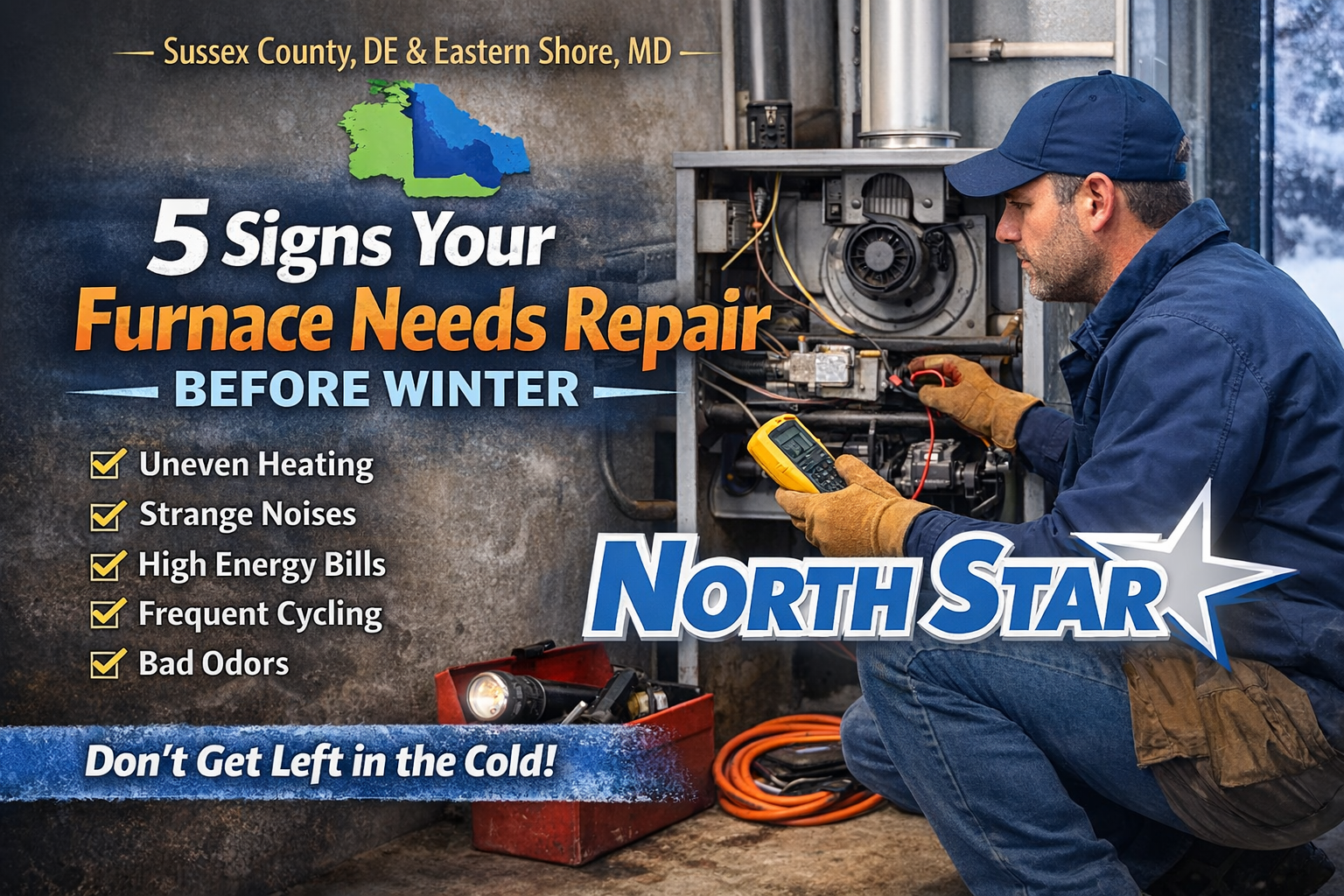
Here are 5 key signs your furnace needs repair before winter hits, and what to do about them.
1. Uneven Heating Throughout Your Home
If some rooms in your home feel warm while others stay noticeably colder, your furnace may be struggling to distribute heat properly.
This is a common issue we see in homes throughout Sussex County towns like Bridgeville, Milford, and Millsboro, especially in older properties or homes with ductwork issues.
Possible causes:
- Clogged air filters
- Failing blower motor
- Leaky or blocked ductwork
- Thermostat inconsistencies
Why it matters:
Uneven heating isn't just uncomfortable—it's often a sign your furnace is working harder than it should, which can lead to higher energy bills and premature system wear.
👉 Pro Tip: If you're constantly adjusting the thermostat but can't get consistent temperatures, it's time to have your system inspected.
2. Strange Noises Coming From Your Furnace
A healthy furnace should operate relatively quietly. If you start hearing unusual sounds, it's your system trying to tell you something.
Common furnace noises and what they mean:
- Banging or popping: Expanding ductwork or delayed ignition
- Squealing: Worn belts or motor issues
- Rattling: Loose components or debris inside the unit
- Grinding: Motor bearing failure (this one needs immediate attention)
Homeowners in areas like Salisbury, MD, and surrounding Eastern Shore communities often ignore these noises until they get worse—but that's when repairs get more expensive.
Why it matters:
Small mechanical issues can quickly escalate into major system failures if left unchecked.
👉 Rule of thumb: If your furnace suddenly sounds different than usual, don't ignore it.
3. Rising Energy Bills Without Explanation
If your heating bill is creeping up—but your usage habits haven't changed—your furnace could be losing efficiency.
This is especially common during early winter months across coastal towns like Rehoboth Beach, Lewes, and Bethany Beach, where systems may sit idle for months before being turned back on.
Common reasons for inefficiency:
- Dirty or clogged filters
- Aging components
- Poor airflow
- Burner or ignition issues
Why it matters:
An inefficient furnace doesn't just cost more to run—it's also under stress, which increases the likelihood of breakdowns.
👉 Quick check: Compare your current energy bill to the same time last year. If there's a noticeable jump, your furnace may need servicing.
4. Frequent Cycling (Turning On and Off Too Often)
Does your furnace turn on, run briefly, then shut off—only to repeat the cycle over and over? This is known as short cycling, and it's a red flag.
Potential causes:
- Overheating system
- Faulty thermostat
- Clogged air filter
- Improper furnace size for your home
In growing communities like Georgetown, DE or expanding neighborhoods around Salisbury, we often see this happen when systems are mismatched to newer home additions or renovations.
Why it matters:
Short cycling puts a ton of strain on your furnace, leading to:
- Increased wear and tear
- Higher energy costs
- Reduced lifespan of the unit
👉 Bottom line: If your system can't maintain a steady cycle, it's time to call a professional.
5. Unusual Smells or Poor Air Quality
A slight dusty smell when you first turn on your furnace for the season is normal. But persistent or strong odors are not.
Watch for these smells:
- Burning smell: Electrical issues or overheating components
- Musty odor: Mold or moisture in ductwork
- Rotten egg smell: Potential gas leak (this is urgent—leave immediately and call for help)
Indoor air quality is especially important in tightly sealed homes across the Eastern Shore, where winter air circulation is limited.
Why it matters:
Your furnace doesn't just heat your home—it affects the air you breathe. Problems here can impact your health, especially for kids or anyone with respiratory issues.
⚠️ Safety note: If you ever suspect a gas leak, don't wait—leave the home and contact emergency services.
Bonus Sign: Your Furnace Is Over 10–15 Years Old
Even if your system seems to be working "fine," age alone can be a factor.
Most furnaces last around 10–15 years. If yours is approaching that range, it may:
- Run less efficiently
- Require more frequent repairs
- Be at higher risk of sudden failure
For homeowners in Sussex County and the surrounding Maryland Eastern Shore, proactive maintenance—or even planning for replacement—can save a lot of stress during peak winter months.
Why Timing Matters (Especially in Our Area)
Here's the reality: When the first cold wave hits Delaware and Maryland, HVAC companies get slammed. That means:
- Longer wait times
- Higher emergency repair costs
- Limited appointment availability
By addressing furnace issues early—before winter—you:
- ✔ Avoid emergency situations
- ✔ Save money on repairs
- ✔ Ensure your home stays warm when it matters most
What You Should Do Next
If you've noticed any of these signs, don't wait until your furnace fails completely. Here's a simple action plan:
- Check your air filter (replace if dirty)
- Listen for unusual sounds
- Monitor your energy usage
- Schedule a professional inspection
Even a quick tune-up can catch small issues before they become big (and expensive) problems.
Final Thoughts
Your furnace is one of the most important systems in your home during the winter months—especially here in Sussex County, Delaware and across the Eastern Shore of Maryland.
From Seaford and Laurel to Salisbury and Ocean View, homeowners rely on dependable heating to stay comfortable and safe.
The good news? Most furnace problems give you warning signs—you just have to know what to look for. By catching these early, you can avoid breakdowns, save money, and go into winter with confidence.